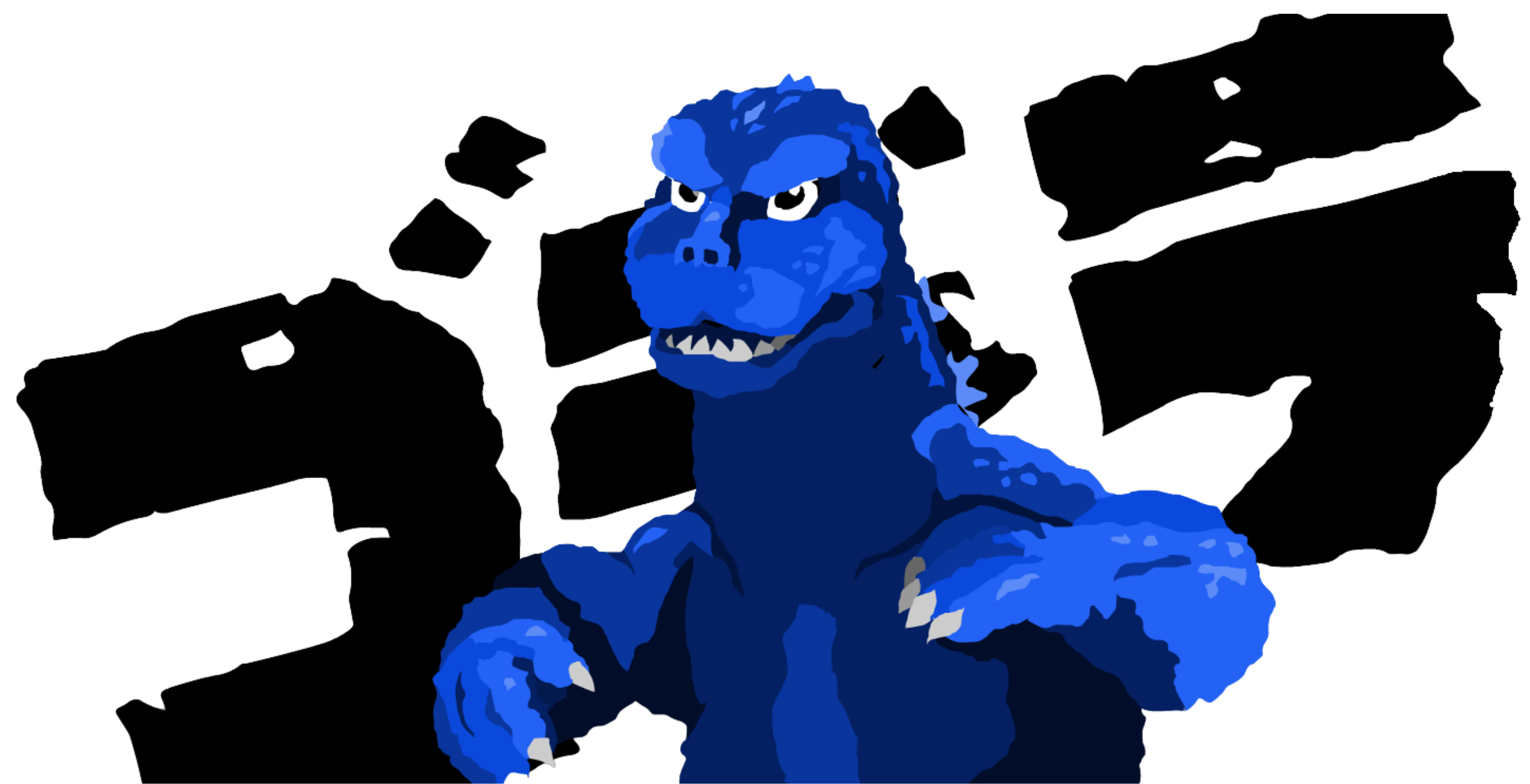
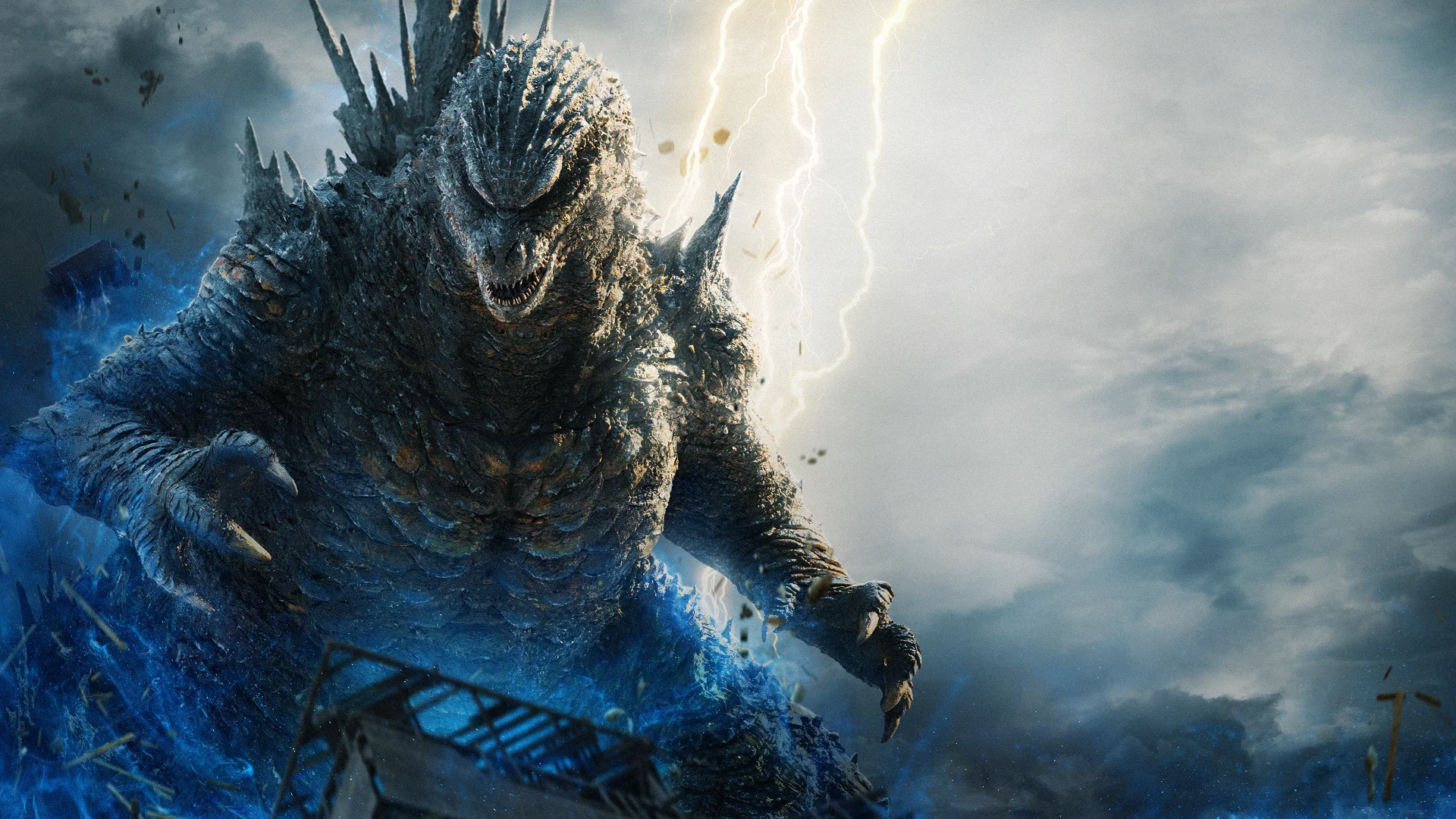
The King of the Monsters is about to face off against another icon in Godzilla Minus Zero.
Upfront: If you don’t want to be spoiled on the opponent kaiju for Takashi Yamazaki-san’s follow-up to his Oscar winner Godzilla Minus One, do not watch the trailer released this morning. And certainly don’t read this article!
‘Minus Zero’ is Meaning Packed
TOHO has released a massive new trailer for Godzilla Minus Zero, giving fans their best look yet at director Takashi Yamazaki’s follow-up to the Academy Award-winning Godzilla Minus One. Set two years after the events of the previous film, the new footage brings back Kōichi Shikishima, Noriko and much of the surviving cast while revealing a Japan once again preparing to face the seemingly unstoppable Godzilla.
Of course, the Big G survived the events of Minus One. That’s how we’re here. But Godzilla isn’t the only monster coming.
After months of speculation over whether Minus Zero would introduce another kaiju, the trailer finally gives us our answer.
Another King Returns
TOHO is still keeping the kaiju hidden from view, but the trailer isn’t particularly subtle about who is coming. Strange bolts of energy streak through the sky and slam into the earth, immediately recalling the signature Gravity Beams of, you guessed it: King Ghidorah.
And then comes the roar.
As Godzilla appears engulfed in flames and plummeting through the sky near the trailer’s climax, one of the most recognizable cries in kaiju history can be heard. For Godzilla fans, that sound needs no introduction.
More than 60 years after King Ghidorah first descended from the heavens, Godzilla’s greatest enemy is preparing to challenge him again. Yet, if you’ve followed Takashi Yamazaki’s previous work with the King of Terror, this shouldn’t be wholly surprising. In fact, we already have a pretty good idea what this new Ghidorah will look like.
Ghidorah, the Three-Headed Monster

King Ghidorah made his debut in Ishirō Honda’s 1964 classic Ghidorah, the Three-Headed Monster, the fifth film in the Godzilla series and one of the most important entries in the franchise.
Unlike Godzilla, Rodan and Mothra—all creatures ultimately born from or connected to Earth that started in their own solo films from TOHO—Ghidorah was something altogether different. He came from space. And he required the combined effort of those three Earthbound kaiju to halt his debut invasion.
A golden, three-headed, two-tailed dragon capable of flight and firing destructive Gravity Beams from his mouths, Ghidorah was presented as a planetary destroyer. Venus, according to the film, had already fallen victim to the monster thousands of years earlier.
His arrival fundamentally changed the trajectory of the Godzilla series. Godzilla and Rodan spend much of Ghidorah, the Three-Headed Monster fighting one another before Mothra attempts to convince the two monsters to defend Earth. The resulting battle effectively transforms Godzilla from the nuclear nightmare of the original 1954 film into something approaching an antihero—and eventually a defender of Earth.
Ghidorah, in turn, became the perfect opposite. If Godzilla was destruction born from humanity’s own actions, King Ghidorah was destruction from beyond: an apocalyptic force descending from the sky.
The rivalry stuck. Ghidorah returned almost immediately in 1965’s Invasion of Astro-Monster, which, as fans know, gave Ghidorah the title of Monster Zero. Truly, we should’ve known all along that Minus Zero would hold multiple meanings.
Ghidorah never slept for long. He returned via Destroy All Monsters in 1968 and Godzilla vs. Gigan in 1972. Through those appearances, he became firmly established as Godzilla’s arch-nemesis and one of TOHO’s most recognizable monsters. And like Godzilla himself, with all their history, Ghidorah has undergone at least a dozen radical transformations.
Six Decades of King Ghidorah

The Heisei series drastically reinvented the monster in 1991’s Godzilla vs. King Ghidorah.
Rather than an ancient extraterrestrial destroyer, this Ghidorah originated with three genetically engineered creatures called Dorats that were left on Lagos Island and exposed to the same radiation responsible for transforming Godzilla. The resulting King Ghidorah eventually battled Godzilla before being resurrected as the cybernetic Mecha-King Ghidorah.
Then, ten years later, Godzilla, Mothra and King Ghidorah: Giant Monsters All-Out Attack turned the monster’s traditional role completely on its head. In GMK, Ghidorah was no destroyer of worlds at all. He was one of Japan’s ancient Guardian Monsters—the immature “Thousand-Year Dragon” destined to defend the country from an extraordinarily malevolent Godzilla—if he hadn’t been re-awoken prematurely, that is.
The Millennium era gave us yet another relative of the three-headed monster with Monster X and its transformation into Keizer Ghidorah in 2004’s Godzilla: Final Wars.
Then, in 2019, King Ghidorah received his first international reinvention.

Legendary’s Godzilla: King of the Monsters restored Ghidorah’s extraterrestrial origins and reignited the titan as “Monster Zero,” an invasive alpha predator whose very presence disrupted Earth’s natural order. That enormous incarnation gave each of Ghidorah’s three heads distinct personalities and introduced the monster to an entirely new generation of moviegoers.
Yet despite Ghidorah’s continued prominence in games, animation, merchandise and other media, the classic King Ghidorah has been absent from TOHO’s live-action Godzilla films since Final Wars in 2004. So, even though it feels as if the Golden Dragon has never been out of the spotlight, this does make Minus Zero a significant return to Japanese cinema.
And it won’t be Takashi Yamazaki’s first time directing a battle between these two monsters – nor deciding on his version of the iconic villain.
Yamazaki Has Already Test-Drove His Godzilla vs. Ghidorah
Before Godzilla Minus One became an international phenomenon in 2023, Yamazaki brought Godzilla and King Ghidorah together for Godzilla the Ride: Giant Monsters Ultimate Battle at Seibuen Amusement Park in Saitama, Japan.
Opening in 2021, the motion-simulator attraction placed guests directly in the middle of a spectacular battle between Godzilla and King Ghidorah.
And importantly, Yamazaki didn’t simply supervise the project. He wrote and directed the ride film, with the visual effects created by Shirogumi—the same VFX studio closely associated with Yamazaki’s film work.
Both monsters received original designs for the attraction. The Ride’s Godzilla combined recognizable elements from several generations of the character, particularly the massive proportions associated with the Heisei Godzilla and some of the rugged textures familiar from Legendary’s MonsterVerse incarnation.
King Ghidorah received an equally distinctive makeover right alongside. Yamazaki’s Ghidorah retained the monster’s unmistakable golden scales, enormous wings, twin tails and three serpentine necks, but its anatomy was heavier and more animalistic than many traditional TOHO incarnations. The creature shared some characteristics with Legendary’s 2019 Ghidorah while remaining its own interpretation.
And that ride has suddenly become extremely relevant to Godzilla Minus Zero alongside fan and franchise expectations.
We Already Know What Minus Zero’s Ghidorah Will Look Like – Mostly

When the first images of Godzilla Minus One appeared in 2023, longtime fans immediately noticed something familiar about Yamazaki’s new Godzilla. He looked an awful lot like Godzilla the Ride. Which was, of course, a choice made by both properties’ architect.
Yamazaki later explained that he and his team had been extremely pleased with the Godzilla they created for the attraction. Although they explored other concepts while developing Minus One, the Ride design ultimately became the foundation for the movie’s Godzilla. The design was refined and improved for cinema, though. Detail was increased to accommodate the much higher-resolution model required for the film, while Godzilla received a narrower face, more aggressive features and dramatically enlarged, jagged dorsal plates.
Now, as we look at ‘Ride Godzilla’ beside ‘Minus One Godzilla’ we have a very strong indication of what to expect from Ghidorah in Minus Zero: Yamazaki has already designed and directed his own version of Ghidorah. If he doesn’t consider it broken, he’s not likely to fix it.
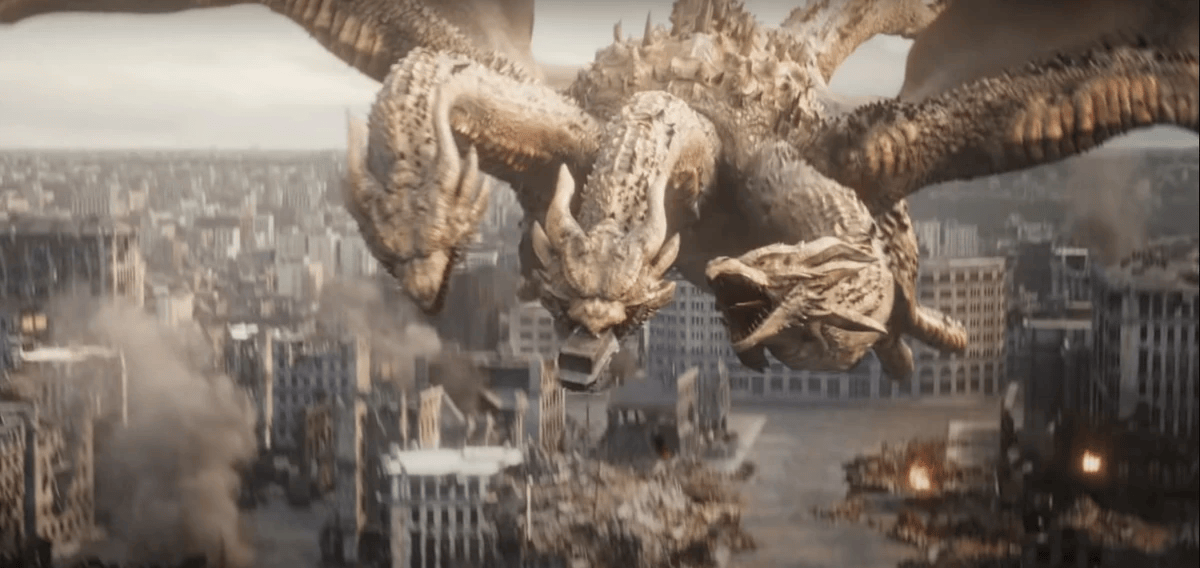
To be clear, TOHO has not confirmed that the King Ghidorah appearing in Godzilla Minus Zero uses the Ride design. But there is now an obvious precedent and, well, we’ll leave it at that.
What we can say is this: If Yamazaki approached Ghidorah the same way he approached Godzilla, the Minus Zero design will be a refined, higher-detail evolution of the King Ghidorah he already created for Godzilla the Ride.
And if that’s the case, fans have more than a roar to examine while waiting for the full reveal.
With most of the design speculation out of the way, the bigger question looms: What will be Ghidorah’s origins in Minus Zero?
Yamazaki’s Ghidorah to Flesh Out Minus Zero?

Godzilla Minus One deliberately stripped the franchise back to its foundations. There were no aliens, secret monster organizations, futuristic superweapons or sprawling kaiju mythology.
There was simply postwar Japan—and Godzilla.
Yamazaki treated Godzilla as a genuine disaster. The monster’s attacks carried human consequences, and the spectacle remained anchored to the lives of Kōichi, Noriko, Akiko and the people attempting to rebuild a country devastated by war.
King Ghidorah introduces something fundamentally different.
Does Yamazaki embrace the original 1964 concept and introduce a literal extraterrestrial dragon into this grounded postwar world? Will the new “gifted characters” and “extra-sensory” abilities of Minus Zero bring back familiar territory from Ghidorah’s Showa films and their alien counterparts?
Or Could Ghidorah instead be an ancient terrestrial organism? Perhaps the heavy psychic-power underpinnings of the Heisei series will return, instead?
Might the strange phenomena surrounding Noriko at the conclusion of Minus One connect somehow to the arrival of another monster, too?
Or will Yamazaki completely reinvent Ghidorah’s origin, just as previous eras of the franchise have done? This is where we will still be surprised.
Historical Setting
There’s also the historical setting to consider. Godzilla Minus Zero takes place in 1949, placing the story four years after the end of World War II and two years after Godzilla’s attack on Ginza.
Japan is still occupied by Allied forces. The Cold War is taking shape. The Soviet Union will test its first atomic bomb that same year. And now, into that volatile historical moment, something appears to be eclipsing the hell that is Yamazaki’s Godzilla.
Whether the director intends to connect any or all of these ideas remains unknown, but Minus One demonstrated just how effectively he can use a period setting to give Godzilla’s fantastical existence historical weight. Ghidorah presents an opportunity to take that concept somewhere entirely new.
Godzilla Isn’t Finished Either
Ghidorah may understandably dominate the conversation surrounding the new trailer, but Godzilla himself appears to have changed as well.
The ending of Minus One made his survival clear. After the civilian-led operation successfully destroyed Godzilla, a fragment of his body was shown regenerating beneath the ocean. Minus Zero follows through on that ominous final image: Godzilla has returned.
Yamazaki has described the returning monster as sharper and more threatening in appearance, while the trailer suggests that Japan has spent the intervening years preparing for the possibility that its nightmare wasn’t truly over. That’s an important distinction from Minus One.
The first time, Japan had virtually nothing capable of stopping Godzilla. This time, they know exactly what he can do. In kind, the new trailer (below) introduces a new kaiju extermination operation while returning Minus One characters find themselves drawn back into the catastrophe. Kōichi and Noriko Shikishima return, as do Kenji Noda, Shirō Mizushima, Seiji Akitsu, Sumiko Ōta and Tatsuo Hotta.
They are joined by new characters including biologist Kanji Murakami, played by Min Tanaka, as Japan attempts to understand and survive another impossible disaster. Then Ghidorah arrives.
‘There Is No Third Time’
Perhaps the most ominous words associated with Godzilla Minus Zero are the ones TOHO has repeatedly used to promote it:
“There is no third time. Everything ends here.”
That certainly sounds definitive. Yamazaki-san has clearly stated he intends to do two films and not a trilogy – so this certainly confirms that. So ,in that context, Ghidorah is an appropriately enormous monster to put at the center of that conclusion. If you’re only going to do two Godzilla films, it’d be a lifelong regret to not put his arch nemesis to use, right?
And for a filmmaker as deeply versed in Godzilla history as Takashi Yamazaki, bringing Ghidorah into the world of Minus One offers the opportunity to reinterpret one of the oldest and greatest rivalries in the entire kaiju genre.
Long live the King(s).
Godzilla Minus Zero opens in Japan on November 3, 2026—Godzilla Day—and in theaters across North America on November 6.
Takashi Yamazaki returns as writer, director and visual effects supervisor.